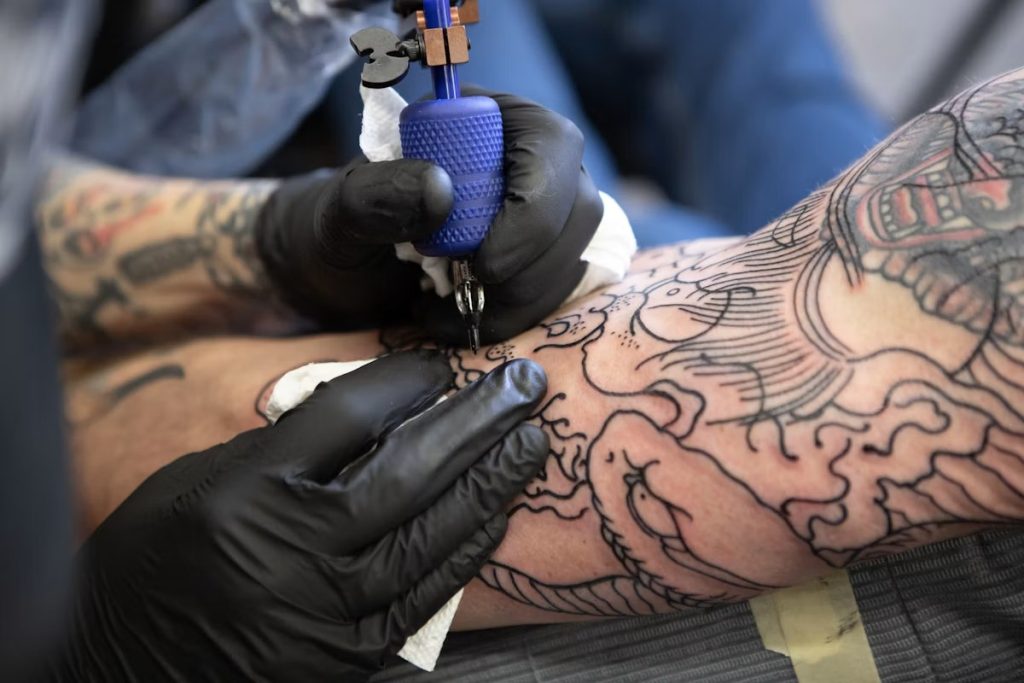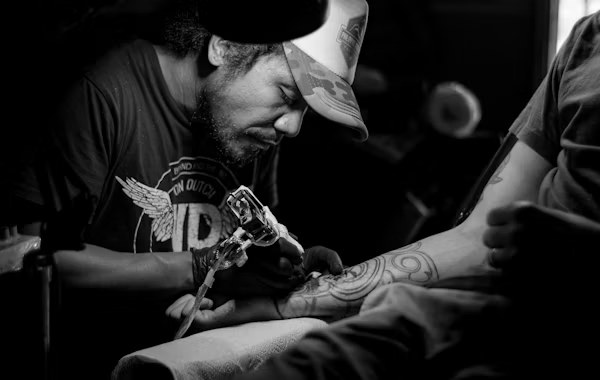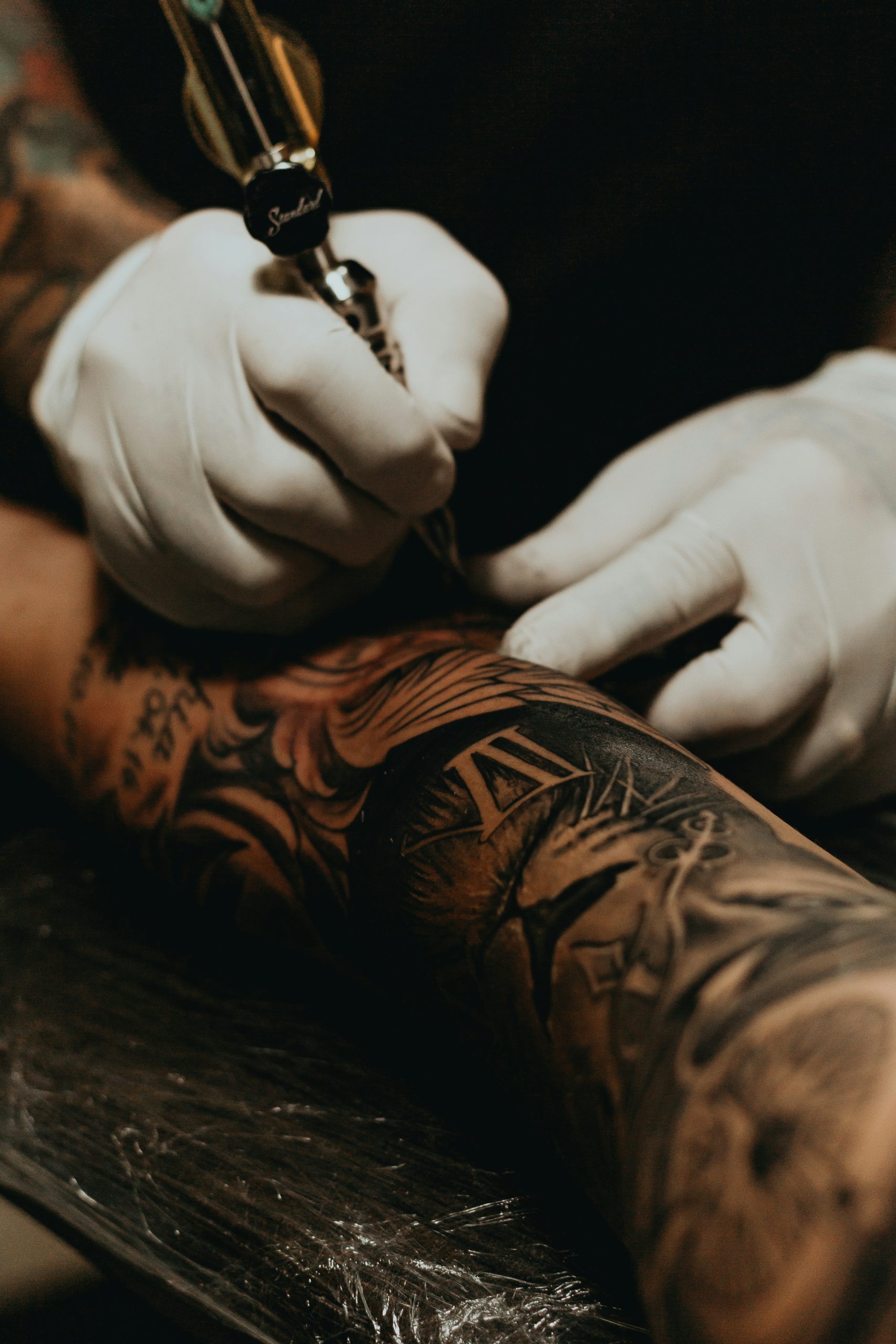
Geometric blackwork — defined by its reliance on pure line, negative space, and mathematical form — has become one of the dominant tattoo languages of the past decade. It draws from Polynesian tradition, from the sacred geometry of Islamic architecture, from the dot-work of South American indigenous art, and from something more difficult to name: a contemporary hunger for permanence in a world that refreshes itself every 48 hours.
The Sacred Geometry Connection
Mandalas, metatrons, the Flower of Life — these forms carry specific meaning in esoteric and spiritual traditions. The circle represents wholeness; the triangle, transformation; the hexagon, the structure underlying nature itself. For many collectors, the choice of a geometric piece is not purely aesthetic. It is a private cosmology, worn outward.
Artists like Dr. Woo, Roxx, and Chaim Machlev built their reputations on the controlled precision that geometric work demands. There is nowhere to hide in blackwork. A line that deviates by a millimeter at the wrist looks like an error by the elbow. The discipline required produces a category of artist who thinks more like an architect than a painter.
Every line is a commitment. Unlike colour work that can soften or shift over decades, blackwork lives and dies by its precision. I work in pencil on paper for weeks before I touch a client.