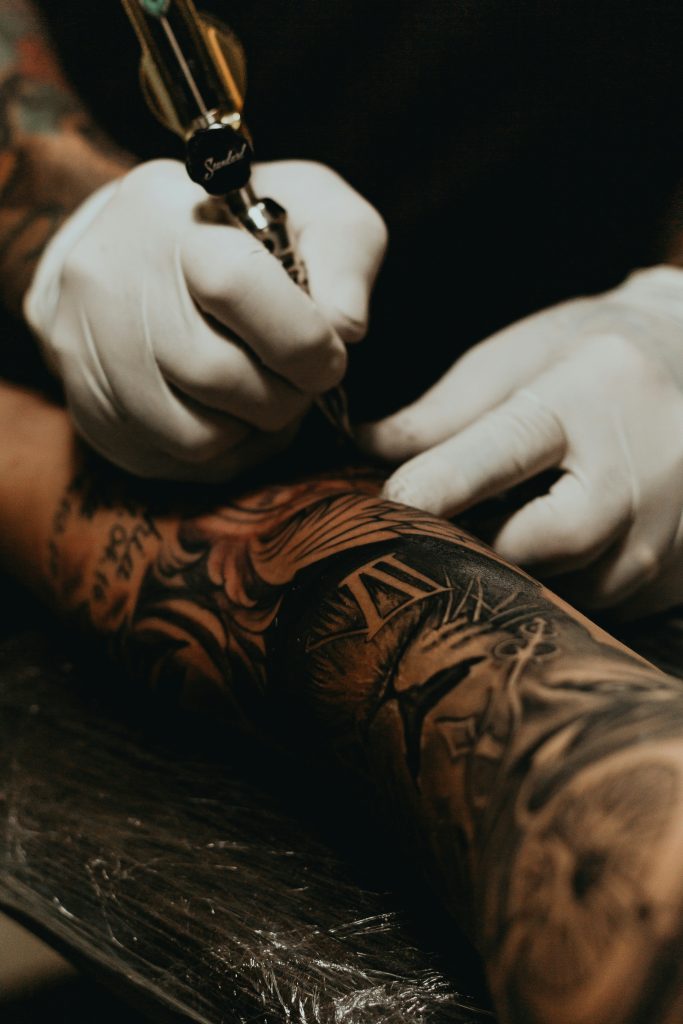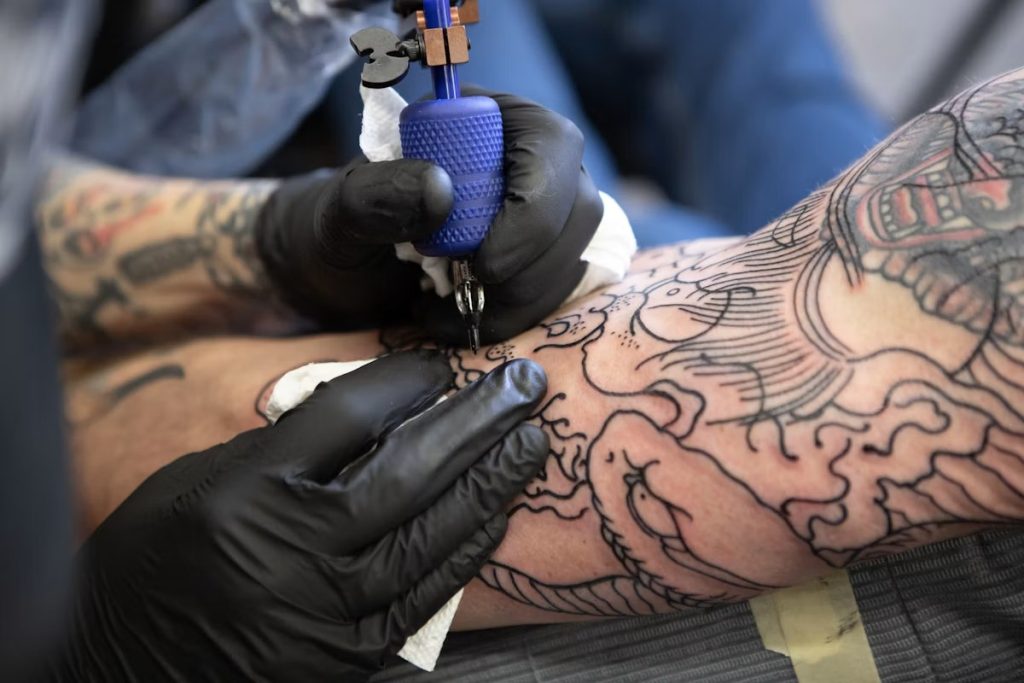
To understand irezumi, you must first sit with its slowness. A full-body suit — hirezumi — can take a decade to complete. The artist and client age together through the process. The skin changes, the relationship deepens, and the imagery — dragons, waves, cherry blossoms, koi — accumulates meaning like sediment.
The tradition originates in the Edo period (1603–1868), when decorative tattooing flourished among labourers, artisans, and later the criminal underworld. The visual grammar was established then: large-scale imagery derived from woodblock prints, particularly those of Hokusai and Hiroshige, rendered in sumi ink with painstaking hand technique.
Tebori vs. Machine
The central technical debate in contemporary irezumi practice is the one between tebori — hand-poked tattooing using a wooden or metal handle fitted with needles — and the rotary or coil machine. Traditionalists argue that tebori produces a softer, more organic result, with ink that settles into the skin differently.
A tebori tattoo breathes differently. The ink settles softer, the gradient feels more natural. You can see the hand of the artist in every transition. With a machine, you can achieve technical perfection. With tebori, you can achieve something beyond technical.— Horitomo, San Jose
Machine advocates counter that consistency and speed — which translate to less trauma to the skin and more predictable healing — are meaningful advantages. The best contemporary irezumi artists should be evaluated on the quality of their imagery and compositional thinking rather than their tool of choice.
The Living Tradition
Outside Japan, irezumi-informed tattooing has found serious practitioners in the United States, Europe, and Australia. Artists like Shige (Yellow Blaze), Horitomo (State of Grace), and Filip Leu have contributed to a global evolution of the form while maintaining their debt to its origins.